
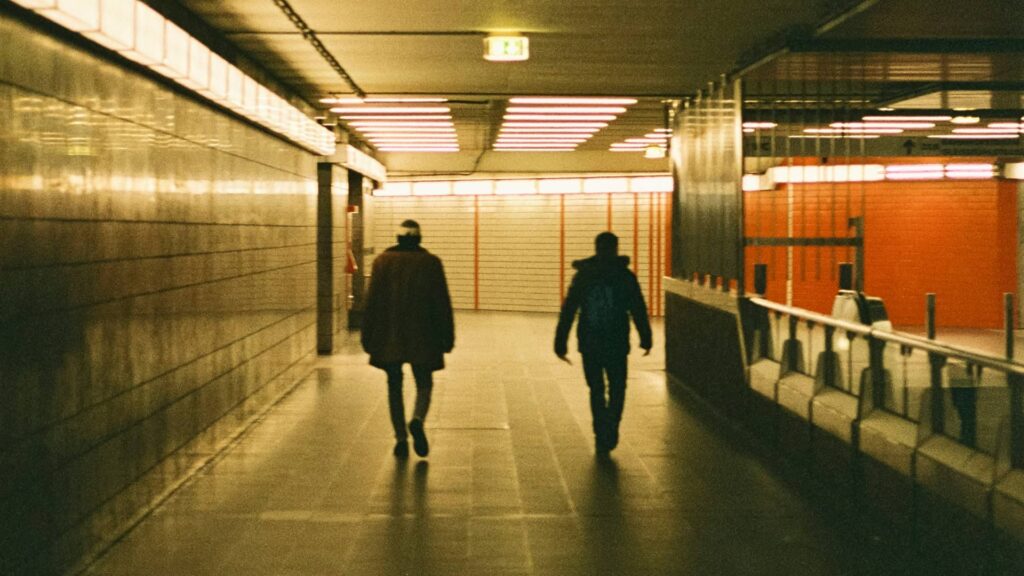
Photo: Markus Spiske
There’s a dangerous idea many of us carry through life:
"I’ve already invested too much to stop now."
Too much time.
Too much effort.
Too much love.
Too much money.
Too much history.
And because of that investment, we continue walking barefoot into fire, convincing ourselves that endurance is the same thing as wisdom.
But it isn’t.
Sometimes wisdom is knowing when to stop.
We rarely struggle to recognize pain in obvious situations.
If you walked out your front door every morning and stepped onto broken glass, eventually you’d change your route.
If a stove burned your hand every time you touched it, you wouldn’t call repeated suffering “commitment.”
You’d adapt. You’d protect yourself. You’d choose another path.
Yet emotionally, professionally, spiritually—we often do the opposite.
We stay in routines that exhaust us.
Relationships that diminish us.
Friendships that drain us.
Careers that hollow us out.
Patterns that once served us, but no longer do.
And because we’ve already invested so much, we tell ourselves:
“Maybe if I just try a little harder.”
“Maybe if I give it more time.”
“Maybe if I sacrifice a little more of myself, it’ll finally work.”
But there’s a difference between perseverance and self-abandonment.
One builds your life.
The other slowly erodes it.
The hardest part about walking away is that we often treat decisions as permanent verdicts.
As if stepping back means failure.
As if changing direction means we were wrong.
As if leaving something behind means we never truly loved it.
But that’s not true.
You can deeply love something and still recognize it is no longer healthy for you in its current form.
You can appreciate what something once gave you while also admitting it’s now causing pain.
You can step away without hatred.
Without bitterness.
Without turning your life into a courtroom where every decision must end in absolutes.
Sometimes stepping away isn’t about giving up forever.
Sometimes it’s simply creating enough distance to see clearly again.
There’s a reason clarity often arrives during walks, long drives, silence, or moments away from the thing consuming us.
Even in studies around creativity and problem-solving, people often solve difficult problems after stepping away from them. The mind loosens. Perspective widens. The emotional fog clears.
The same principle applies to life.
When something is constantly hurting us, we become trapped inside its gravity. We stop seeing reality clearly. We become emotionally attached to solving the pain rather than questioning whether we should continue carrying it at all.
And over time, suffering can become familiar enough that we mistake it for purpose.
That’s the danger.
The Stoics spoke often about perception.
Not because perception changes reality, but because perception determines how we engage with reality.
Marcus Aurelius wrote:
“You have power over your mind — not outside events. Realize this, and you will find strength.”
Part of that strength is recognizing when your attachment to an outcome is costing you your peace.
Not every difficult thing should be abandoned. Some things do require patience, discipline, endurance, and resilience.
But if something consistently destroys your spirit, isolates you from yourself, or causes pain without growth, then stepping back may not be weakness at all.
It may be intelligence.
It may be self-respect.
It may be survival.
Growth requires revision.
The version of you that exists today should not think exactly like the version of you from five years ago. Or even six months ago.
If your perspectives never evolve, your life won’t either.
And sometimes evolution begins with a pause.
A walk.
A breath.
A difficult conversation.
A boundary.
A resignation letter.
A goodbye.
A moment of honesty where you finally say:
“This no longer serves me the way it once did.”
That sentence is not cruelty.
It’s awareness.
Walking away doesn’t always mean never returning.
Sometimes distance changes your understanding.
Sometimes healing changes your perspective.
Sometimes stepping away allows you to rebuild something healthier later.
But you can’t see any of that clearly while standing in the fire convincing yourself that burning is normal.
So take the walk.
Step back from the thing that’s consuming you.
Remove the emotional goggles for a moment and ask yourself honestly:
- Is this helping me grow?
- Is this costing me my peace?
- Am I staying because it’s right, or because I’m afraid to let go of the investment?
- If I encountered this situation for the first time today, would I still choose it?
Those questions matter.
Because your time is the one investment you never get back.
And the quality of your life is shaped not only by what you hold onto—
but also by what you finally have the courage to release.
No Comments.